Nobody becomes a thought leader by accident. The people who are known and respected in construction got there because they kept showing up, consistently, with something worth saying. Speaking at events and sitting on panels are among the fastest ways to build that kind of visibility.
A well-chosen panel puts you in front of exactly the right audience. It signals credibility before you’ve even opened your mouth. And it creates content that keeps working for weeks afterwards. But only if you approach it with some thought, rather than turning up and hoping for the best.
Why speaking is one of the most efficient marketing tools in construction
Construction is a relationship-driven sector. People want to work with people they know, trust, and have seen demonstrate their expertise in person. A speaking slot or panel appearance does all three at once, in front of an audience that is already interested in your topic.
Compare that with most other marketing activities. A LinkedIn post reaches your existing followers and a few more on the platform. A blog sits on your website waiting for someone to find it. A speaking appearance puts you physically in front of decision-makers, clients, and peers who are paying attention because they chose to be in the room. The concentration of the right people, at the right time, in a setting where you are positioned as the expert, is hard to replicate anywhere else.
There is also a compounding effect that most people do not think about. Once you have spoken at one event, you are far more likely to be invited to speak at others. Event organisers look for people who have a track record, and each appearance makes the next one easier to secure.
How to get on panels and speaking programmes
Most people assume you need to be well-known to get invited onto a panel. That is not how it works. Event organisers are constantly looking for speakers who can bring a specific perspective, real experience, and sector knowledge. They do not need celebrities. They need people who can hold a room and say something useful.
Start by looking at the events you already attend. Most have an open call for speakers or panellists, and many have fringe programmes with lower barriers to entry. Sometimes the call for speakers is led by the panel sponsor, so it may be harder to get a seat on the panel, but it is still worth trying. If you have attended UKREIIF, London Build or UK Construction Week, you already know the format and the audience. Pitch yourself for a session that aligns with what you know and what your firm does.
When you pitch, be specific. Do not say ‘I can talk about offsite construction.’ Say ‘I can talk about how modular bathroom pods reduced programme time by six weeks on a 200-unit residential scheme in Manchester.’ Or instead of ‘I can talk about retrofit,’ try ‘I can talk about what we learned from retrofitting 150 social housing units in twelve months, including the three things we would do differently next time.’ Event organisers want to know exactly what the audience will take away, not a vague subject area.
If open calls are not available, approach the organisers directly via LinkedIn. Tell them what you would speak about, why it is relevant to their audience, and what qualifies you to talk about it. Keep it short and specific. Most organisers respond well to a confident, clear pitch.
What to prepare before you step on stage or onto a panel
Preparation is where most people either overdo it or underdo it. You do not need a script, but you do need to know your three key points and be confident you can discuss each with examples from your own experience.
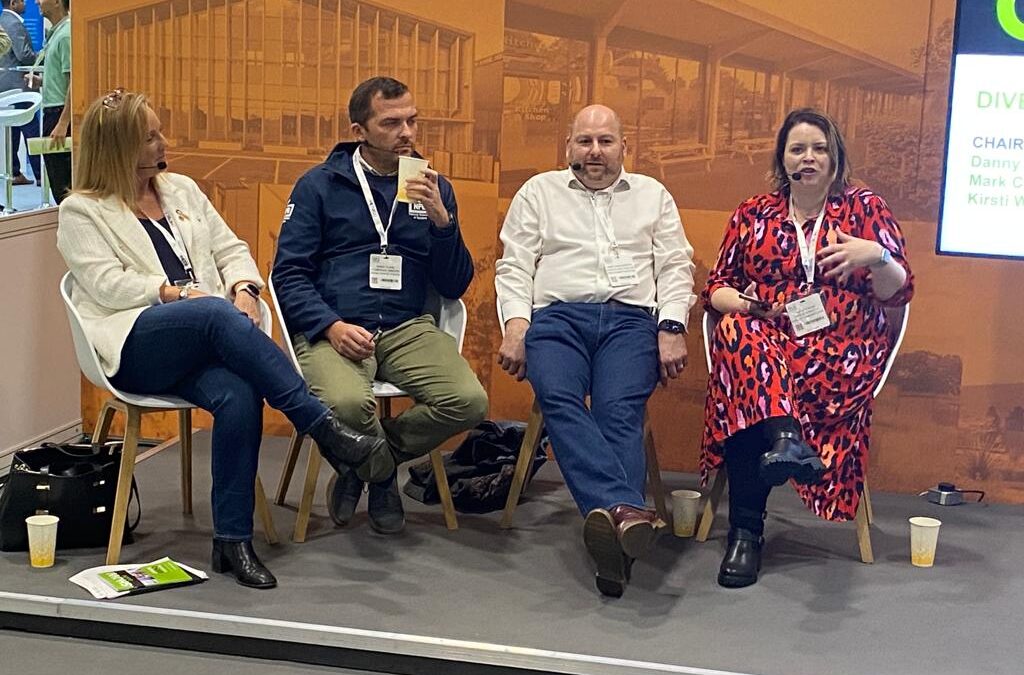
For a panel, think about the questions you are likely to be asked and prepare your answers in advance, but do not rehearse them word for word. Panels work best when they feel like a conversation, not a series of prepared statements. The moderator will guide the discussion and let you know before the event in which direction they will take it, and the audience will respond better to someone who is thinking on their feet than to someone who is clearly reciting.
For a speaking slot, know your structure but leave room to be natural. The talks that land best are those where the speaker clearly knows their material and speaks to the audience. If you are using slides, keep them simple. A few images and keywords, not paragraphs of text that you read out. You want the audience to listen to you and not read the screen.
One thing that catches people out: know what you want the audience to do after your session. Whether that is connecting with you on LinkedIn or visiting your website, have a clear outcome in mind before you walk on stage.
How to make the most of the opportunity on the day
The session itself is only part of the value. What happens around it matters just as much. Arrive early and stay after. The conversations that happen before and after a panel are often more valuable than the session itself, because people are more relaxed and more likely to talk openly about what they are working on.
If you are on a panel with other speakers, connect with them in advance. A quick LinkedIn message a week before to introduce yourself goes a long way. It makes the on-stage dynamic more natural, and those co-panellists become part of your network afterwards.
During the session, be generous with your knowledge. The temptation is to hold back your best insights in case you are ‘giving away the secret.’ You are not. The people in that room are there to learn, and the speakers who share openly are the ones who get remembered and recommended. Holding back makes you forgettable.
Turning your speaking slot into content that keeps working
A 45-minute panel or talk contains enough material for weeks of content. Most people walk off stage and never think about it again, which is a missed opportunity.
Before the event, plan what you will capture. Ask someone to take a few photos of you on stage or on the panel. You could also record a short video afterwards, reflecting on what was discussed and what you took from it.
From one speaking appearance, you can produce a LinkedIn post about what you discussed, a follow-up post about a specific question from the audience, a longer reflection piece for your newsletter or blog, and a series of shorter posts over the following weeks that each pull out a single idea from the session. That is four to six pieces of content from something you were already doing. If you have your phone with you, record the session as a voice note and use the transcription to remind you of what was said and by whom.
Tag the event organisers and your co-panellists when you post. Your audience sees your content, and its reach extends well beyond your own network.
What chairing a panel tells your audience about you
Chairing is different from speaking, and in many ways, it is more powerful. When you chair a panel, you are positioned as the person who sets the agenda, guides the conversation, and draws out the best from the other speakers. That signals a level of authority and sector understanding that is hard to achieve any other way.
If you are offered the chance to chair, take it. It requires a different kind of preparation, more about understanding your panellists and the questions the audience will care about. The positioning benefit is significant as they are seen as the connector, the facilitator, and the person trusted to lead the conversation on behalf of the room.
For those building a profile in the sector, chairing is worth actively pursuing. Approach event organisers and offer to chair sessions on topics where you have credibility. It is a role that many events struggle to fill well, and a good chair is always in demand.
Want to use speaking and events as part of your marketing strategy?